Behind the Name: What “Independent and Confident Kids” Really Means
When parents first walk through our doors, they are often looking for a martial arts program that teaches discipline, focus, and practical physical skills. But at K.I.C.K., our mission extends far beyond kicks and strikes.
| “When I first opened the doors of Karate of LA in 1991, my goal wasn’t just to teach children how to kick and punch. I wanted to build a sanctuary where the traditional values of Goju-Ryu—discipline, respect, and resilience—could help students navigate the challenges of the modern world.” Shihan Vassie Naidoo FOUNDER & CHIEF INSTRUCTOR |
Our name stands for Karate for Independent and Confident Kids—and every class we teach is designed around those two core qualities.
Here is what independence and confidence truly look like on and off the mat:
1. Independence: Developing Self-Reliance and Focus
Independence in martial arts isn’t about standing alone—it’s about learning to trust your own ability to listen, execute, and problem-solve.
When a student learns a complex sequence or works through a challenging drill, they discover that progress comes from their own personal focus and effort. On the mat, independence means:
- Taking ownership of their own learning and practice.
- Building self-control without needing constant external redirection.
- Understanding personal responsibility—from bringing their gear to respecting their training partners.
When kids realize they can rely on themselves to master a difficult skill, that self-reliance stays with them at school, at home, and in their social lives.
2. Confidence: Belonging, Growth, and Courage
True confidence isn’t about being the loudest or strongest person in the room. It’s about feeling capable, resilient, and secure in who you are.
We build confidence step-by-step:
- Overcoming Small Challenges Daily: Every new technique mastered proves to a child that they can do hard things.
- Finding Courage in Practice: Trying something new can be intimidating. Learning to step up and try anyway builds courage that carries into public speaking, testing, and trying new activities.
- Supportive Community: Real confidence grows fastest in an environment where students feel safe to make mistakes and learn from them alongside supportive instructors and peers.
How Our Programs Put Growth Into Action
According to resources on brain-building activities from Harvard University, structured physical play helps children strengthen key executive function skills like focus and self-regulation.
We tailor this approach directly across all age groups:
- Preschool K.I.C.K. Crew (Ages 3–4): Bridges play and structured learning through games and movement drills that foster early focus and self-control.
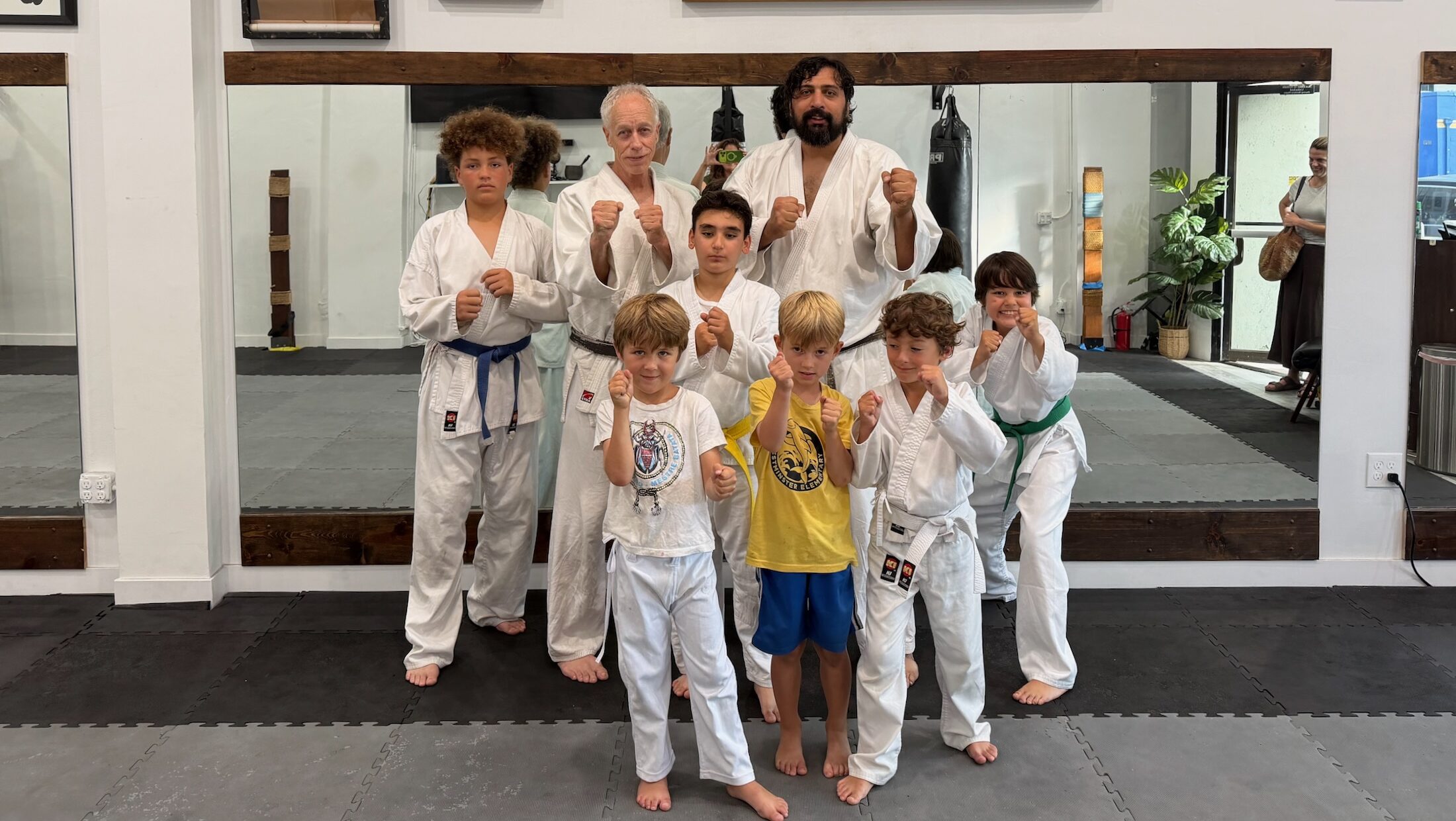
- Elementary K.I.C.K. Crew (Ages 5–12): Uses traditional Goju-Ryu forms (Kata), goal-setting, and belt progression to build long-term perseverance and discipline.
- Teen K.I.C.K. Crew (Ages 13+): Focuses on mental fortitude and leadership skills to help teens navigate peer pressure and social challenges with confidence.
Stronger Kids, Stronger Community
Building independent, confident kids creates a ripple effect. When young people believe in themselves, they become better leaders, supportive friends, and active community members.
Whether your child is participating in their very first warm-up or working toward advanced goals, our goal remains the same: helping them build the character, resilience, and confidence they need to navigate the world with strength and respect.